
Thermostat settings not saving energy? You’re not alone. Many homeowners experience this frustration, wondering why their efforts to program their thermostat for energy savings haven’t yielded the desired outcomes. This thorough guide explores the common reasons why thermostat settings fail to deliver energy efficiency. We’ll cover smarter strategies for programming your thermostat to maximize energy savings, ensuring maximum comfort without unnecessary energy waste. This article will walk you through practical approaches, actionable steps, and crucial considerations to effectively program your thermostat. We’ll delve into the nuances of temperature scheduling, factoring in occupancy patterns and weather variations for a personalized approach to energy efficiency.
Understanding Thermostat Programming Basics
Thermostat Types and Capabilities
varied types of thermostats offer varying levels of programming complexity. Basic models may only allow for simple on/off schedules, while programmable models offer more flexibility, allowing you to adjust the temperature throughout the day or week. Smart thermostats, with their advanced connectivity and learning algorithms, offer the most sophisticated control and energy-saving options. Understanding the capabilities of your specific thermostat is the first step toward optimizing its energy-saving potential. The most basic thermostats are often limited in their scheduling ability. Programmable thermostats, on the other hand, offer more options for adjusting the temperature based on daily routines, while smart thermostats can learn your habits and adjust settings automatically.
Factors Affecting Thermostat efficacy
Thermostat settings alone are not a magic bullet for energy savings. Several factors can influence the efficiency of your energy-saving strategies. These factors include external temperatures, insulation levels, occupancy schedules, and even the orientation of your home relative to the sun. For example, if your home is poorly insulated, a well-programmed thermostat might not significantly reduce energy use compared to a well-insulated home. Understanding these factors will inform your programming efforts to achieve optimal outcomes. Take your insulation levels into account when programming your thermostat.
Common Mistakes in Thermostat Programming
A common error is failing to consider occupancy patterns. A thermostat programmed for one family member may not account for the variations in the home’s temperature needs when other family members are present. Another common mistake is using a one-size-fits-all approach to scheduling. Temperature requirements vary based on the time of year, external temperature fluctuations, and even the presence of people in the house.
Optimizing Your Thermostat Settings for Maximum Savings
Strategic Temperature Adjustments
One of the most crucial facets of effective thermostat programming is strategic temperature adjustment. Avoid drastic temperature changes between periods of occupancy and vacancy. Instead, gradually adjust the temperature in increments that reflect the home’s thermal capacity and your family’s comfort preferences. This approach balances energy savings with user comfort. Consider adjusting the temperature a few degrees, not a sudden shift. Gradually rising or decreasing the temperature is usually more comfortable than sudden shifts.
Creating a Daily Schedule
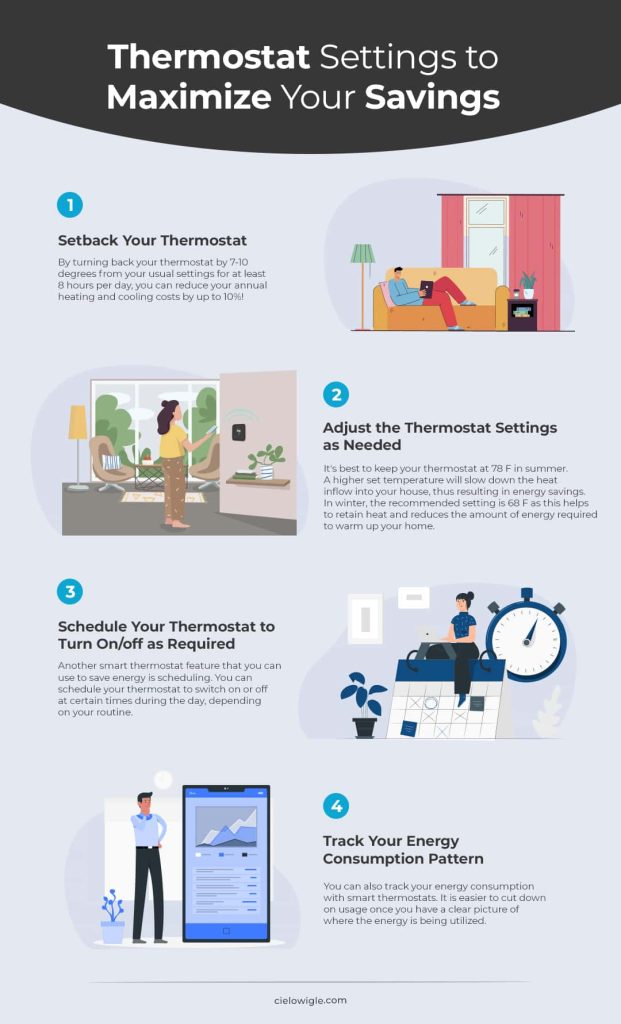
Creating a customized schedule that reflects your daily routine is vital for maximizing energy savings. Program your thermostat to lower the temperature when you’re away from home or asleep and boost it when you anticipate returning. Consider specific needs for varied rooms or areas within the house. This tailored approach will likely lead to significant energy savings without sacrificing comfort.
Harnessing the Power of Smart attributes
Leverage the advanced attributes of smart thermostats, such as geofencing and learning algorithms. Geofencing automatically adjusts the temperature based on your location, ensuring the house is comfortable when you’re home and energy-efficient when you’re away. Smart thermostats also learn your habits over time and adapt to your preferences, improving energy efficiency and user comfort.
Beyond Programming: Essential Considerations
Enhancing Home Insulation
Ensuring adequate insulation around your home significantly influences the efficacy of your thermostat programming. Insulation reduces heat loss in winter and heat gain in summer, allowing your thermostat to maintain optimal temperatures with minimal energy consumption. Investing in proper insulation can drastically alter your energy consumption. Adding insulation will make your thermostat settings more effective and save energy.
Regular Thermostat Maintenance
Regular maintenance of your thermostat ensures accurate temperature readings and optimal performance. A malfunctioning thermostat can lead to energy waste, making it critical to perform routine checks. Cleaning the thermostat sensor and ensuring the unit is not obstructed by any materials are crucial steps.
Exploring Weather-Based Adjustments
Weather conditions play a critical function in energy efficiency. Account for external temperatures when adjusting your thermostat settings. Implement adaptive scheduling strategies during extreme weather events, such as unusually hot or cold spells, to maximize energy savings.
Advanced Thermostat Programming Strategies
Utilizing Holiday or Away Modes
Leverage holiday or vacation modes to adjust the thermostat settings for extended periods of absence. This mode usually lowers the temperature considerably, minimizing energy application while you’re away from home. Using the holiday or away mode is a great energy-saving attribute.
Implementing Occupancy Sensors
Consider installing occupancy sensors to automate temperature adjustments based on the presence or absence of people in the room. This approach will help adjust the temperature and maximize energy savings when the room is vacant. Occupancy sensors are very effective for optimizing energy use.
Experimenting with varied Temperature scopes
Experiment with varied temperature settings to determine the sweet spot that balances energy savings with user comfort. Begin with a moderate reduction and gradually lower the temperature over time as your family adapts. Experimentation allows for finding the optimal balance.
Related Post : Solar Panels Underproducing Power? Causes and What to Check
Common Thermostat Issues and Solutions
Troubleshooting Thermostat Malfunctions
determine and diagnose any issues with your thermostat. A malfunctioning thermostat can lead to inaccurate temperature readings and inefficient energy use. If you’re not comfortable tackling the problem yourself, consult a professional technician for guidance.
Addressing Thermostat Sensor Issues
Ensure the thermostat sensor is not obstructed. Obstructions can interfere with accurate temperature readings, leading to improper adjustments and inefficient use of energy. Position the sensor for optimal accuracy.
Investigating HVAC System Efficiency
Ensure your HVAC system is properly maintained. An inefficient HVAC system can significantly impact your energy consumption. Regular maintenance or repairs can boost energy efficiency of the thermostat.
How to Find the optimal Thermostat Settings for Your Home
How to select the Right Thermostat Type
Choosing the right thermostat type depends on your specific needs. Basic thermostats may only allow simple on/off schedules, while programmable models offer more flexibility. Smart thermostats, with advanced attributes, can learn your habits to maximize energy use. Consider the level of control and automation needed for your energy savings objectives.
Setting Up a Smart Home Integration
Integrating your smart thermostat with other smart home devices can enhance your energy efficiency efforts. This allows for seamless control of your home’s systems, creating a smarter home experience.
Energy Saving Considerations for varied Seasons
Adjusting Settings for Winter
In winter, lower the thermostat setting when you’re away or asleep. However, avoid setting it too low, as this can lead to discomfort. Consider adjusting based on outdoor temperatures to avoid sacrificing comfort.
Adjusting Settings for Summer
In summer, keep the temperature in the high 70s (20s Celsius) when you’re away or asleep. Avoid setting it too high, as this could boost energy consumption. Remember to account for weather conditions and occupancy patterns.
Checking the HVAC System for Problems
Regularly checking your HVAC system for potential issues is key to ensuring optimal energy efficiency. A malfunctioning HVAC system can boost your energy bills despite proper thermostat settings.
Troubleshooting Common Thermostat Problems
Understanding Thermostat Sensor Issues
Understanding the thermostat sensor is crucial. A malfunctioning sensor can affect the accuracy of temperature readings, leading to improper settings and boostd energy consumption. Check for sensor obstructions and ensure proper placement.
Reviewing Programmable Settings
Carefully reviewing your programmable settings is essential. Incorrect or outdated settings can outcome in ineffective energy-saving measures. Check for gaps in your daily schedule and adjust accordingly.
determineing Potential HVAC Malfunctions
Potential malfunctions in your HVAC system should be addressed promptly. A malfunctioning system can significantly impact your energy use, even with optimal thermostat settings. Contact a professional for assistance.
How to Enhance Your Savings
Implementing Energy-Saving Practices
Implementing energy-saving practices throughout your home can complement your thermostat settings for maximum efficiency. This includes using energy-efficient appliances and sealing air leaks around your home. This is key to optimizing outcomes from your thermostat settings.
Implementing Automation
Implementing automation tools further enhances your energy-saving efforts. This can involve connecting your thermostat to smart devices, which can monitor and adjust settings automatically based on your preferences and home conditions.
Exploring Additional Insulation Solutions
Exploring additional insulation solutions can significantly enhance energy efficiency in your home. These additions can improve your thermostat’s efficacy in maintaining optimal temperatures. Check for gaps in your insulation and add extra layers as needed to maximize your energy saving potential.
In conclusion, optimizing your thermostat settings for energy efficiency is not just about saving money; it’s about making a positive impact on the environment. By understanding the intricacies of programmable thermostats and adopting smart programming strategies, you can significantly reduce your energy consumption without sacrificing comfort. Remember to adjust settings based on your specific needs and environment for the optimal outcomes. Consult with a professional if you need further assistance with optimizing your home’s energy efficiency. Try implementing these strategies for a more sustainable and energy-efficient home!